Ayurveda, meaning “Science of life,” is a holistic healthcare system that addresses good, bad, and sorrowful life, focusing on health preservation, protection, and disease prevention to increase lifespan and delay aging.
Health
The Ayurvedic definition of health, as described by Sushruta, consists of five components: dosha (governing energy), agni (metabolic and digestive processes), dhatu (principles governing body tissue formation), mala (bodily wastes), indriya (sense organs), mana (mind), and atma (soul). Each component must be in equilibrium to attain and preserve health, as disequilibrium is a precursor to disease. Ayurveda also emphasizes normal physique, sensory-motor functions, appetite, thirst, endurance to heat, cold, and exertion for health assessment.
Tridosha Concept
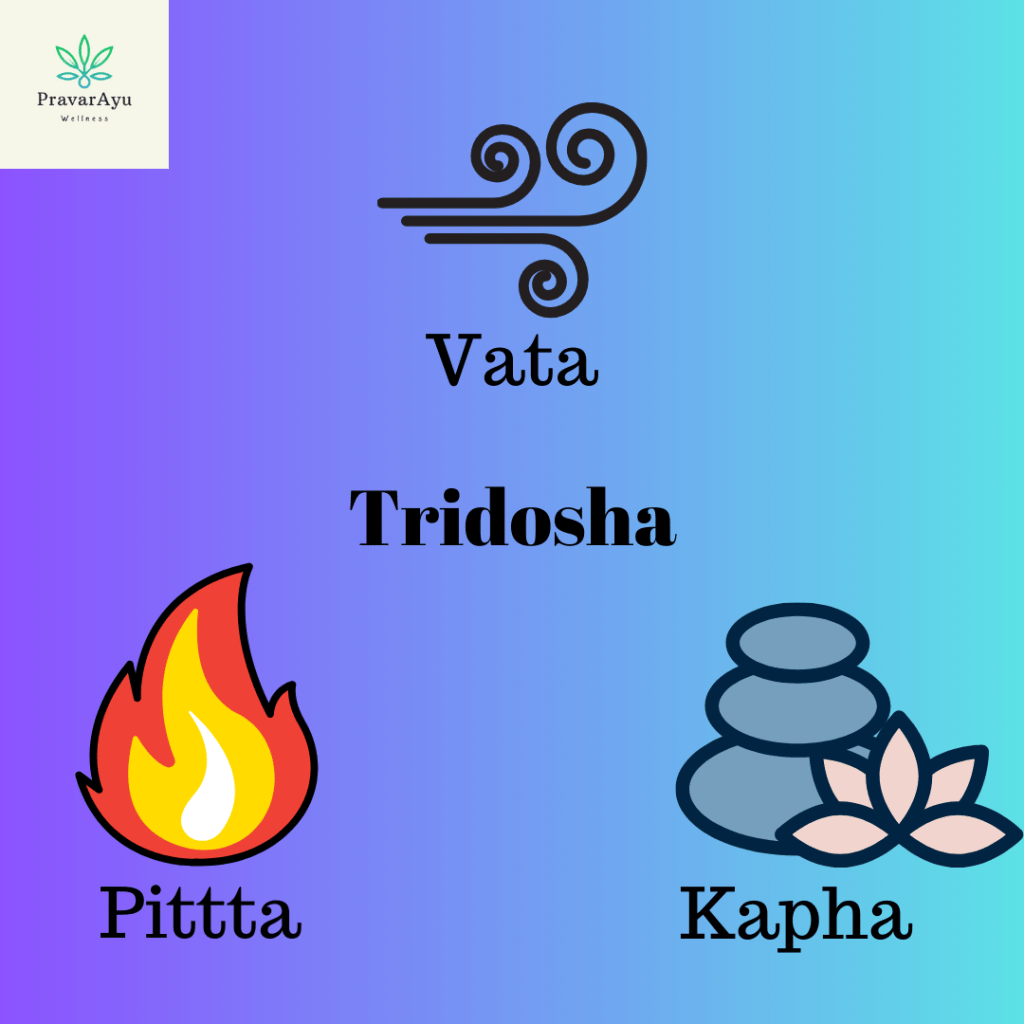
Dosha, meaning impurities or morbidities, are the governing principles of physiology and psychology in Ayurveda. They are the primary constitutional factors of the human organism, maintaining the integrity of the body. The three physical dosha, vata, pitta, and kapha, can vitiate different body tissues and lead to diseases in disequilibrium states. Their equilibrium is crucial for disease-free state and health. The dosha has been correlated with systems theory in physics and biostatistical research. The dosha, as microcosm units, maintain the organism’s integrity by creating, assimilating, and diffusing strength, similar to the Moon, Sun, and Air.
Vata Dosha:
Ayurveda practitioners believe the vata dosha is the most powerful, controlling basic body functions like cell division, mind, breathing, blood flow, heart function, and waste disposal. Disruptions include eating too soon after a meal, fear, grief, and lateness. A dominant vata person is smart, creative, vibrant, and moody, but may be thin, easily lose weight, and cold.
Pitta Dosha:
Pitta controls digestion, metabolism, and appetite hormones. Disruptions include sour or spicy foods, excessive sun exposure, and missing meals. Pitta dominant individuals are goal-oriented, competitive, confident, and natural leaders. They have a medium-sized, muscular build and are hot most of the time.
Kapha Dosha:
Kapha controls muscle growth, body strength, weight, and immune system. Disruptions include daytime naps, sweet foods, and salty drinks. Kapha dosha individuals tend to be routine-oriented, patient, and accepting, with a broad frame and easy weight gain.
Treatment
Ayurveda 1st line of treatment is Nidana Parivarjana. Nidana means cause, while parivarjana means removal or eradication. Effective management requires eradication of cause, especially for diseases caused by micro-organisms. Ayurveda physician suggest lifestyle changes and specific diet pattern for your health condition.
Ayurveda emphasizes the importance of a balance between mind, body, spirit, and environment for health and wellness, with treatments tailored to specific health problems.
Identify the cause (Nidan Parivarjana):
Panchakrama (Detox) :
Panchakarma, derived from the words ‘pancha’ and ‘karma’, refers to the five types of therapeutic procedures or treatments given by physicians. These include therapeutic emesis (vamana), purgation (virechana), enema with decoction (niruha), enema with unctuous substances (anuvasana), and trans-nasal drug administration (nasya). These procedures aim to maintain body equilibrium by expelling excessively aggravated dosha outside, and are considered a seasonal regimen for health preservation and disease prevention.
Shaman (Internal Medicine):
Shamana Chikitsa is an Ayurvedic alleviant care method that reduces, suppresses, and eliminates disease symptoms. It involves balancing the three rogas (vata, pitta, and kapha) and is simpler and less severe than Shodhana Chikitsa. Shamana therapies aim to rid the body of toxins from accumulated ama, using drugs within the body.
Rasayana( Rejuvenation Therapy):
Rasayana, an Ayurvedic medicine, aims to prevent old age and prolong life by preserving health and preventing diseases. It involves proper nourishment and transportation of nutritive fluids and blood. Rasayana treatments include antioxidant, immunomodulatory, adaptogenic, anabolic, nutraceutical, and anti-ageing therapies. Ayurveda advises body purification before administration for optimal benefits. Rasayana therapy provides longevity, good memory, intellect, youthfulness, luster, complexion, voice, strength, and improved deliberation, respectability, and brilliance. It also promotes health and prevents disease recurrence by restoring body constituent equilibrium.
 pravarayu.com
Leave a comment